Russia-Ukraine war: Baltic Sea incident raises European security concerns
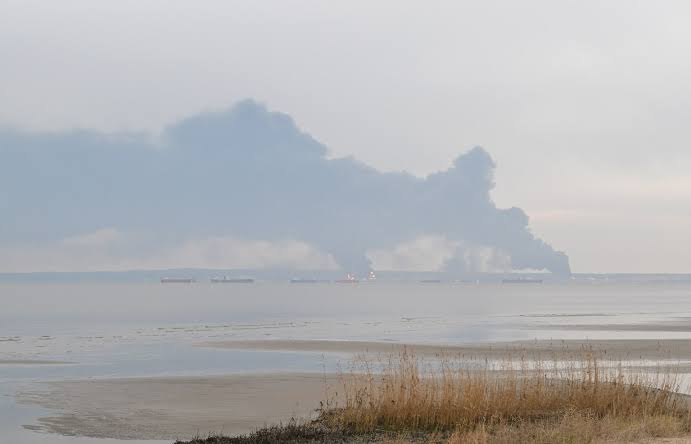
NEW DELHI: Tensions in northern Europe have intensified after Ukrainian President Volodymyr Zelenskyy confirmed that Ukrainian forces carried out a drone strike on a Russian cargo vessel in the Gulf of Finland, raising fresh concerns about the wider security implications of the ongoing Russia-Ukraine war.
The vessel, identified as Sparta II, was attacked on November 21 while travelling towards Russia's Baltic Sea exclave of Kaliningrad. The incident caused a fire onboard, forcing the evacuation of all 16 crew members. One crew member was reportedly injured.
In an interview with Bloomberg, Zelenskyy defended the operation, describing the vessel as a legitimate military target because of its alleged links to Russia's Defence Ministry logistics network and its suspected role in transporting military supplies. He maintained that the attack took place in Russian territorial waters. However, the presence of military cargo onboard could not be independently verified.
The Sparta II is operated by Oboronlogistika, a Russian shipping company that provides logistical services to the country's Defence Ministry. The vessel has been under US sanctions since 2022.
International rescue operation in the Gulf of Finland
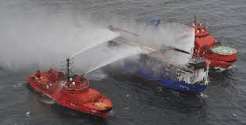
Following the attack, the damaged vessel drifted towards Finnish waters near the coastal town of Loviisa. Finnish authorities coordinated an emergency response involving Finnish, Estonian and Russian rescue vessels. Firefighting teams worked to control the blaze and prevent further damage to the ship.
The operation highlighted the importance of international coordination in the strategically sensitive Baltic Sea region. The vessel was subsequently towed back towards Russian waters and anchored in St Petersburg.
Finnish authorities had also introduced temporary air and maritime restrictions in parts of the eastern Gulf of Finland following the initial incident, reflecting concerns about civilian safety and maritime traffic.
Norway urges caution and respect for international law
The incident has also drawn attention from Ukraine's European partners. Norwegian Defence Minister Tore Sandvik said Oslo was maintaining dialogue with Kyiv regarding the need to preserve stability in neighbouring regions.
Sandvik emphasised that Ukraine must ensure its military operations comply with international law. At the same time, he maintained that the wider conflict could end if Russia stopped its war against Ukraine.
Norway remains an important supporter of Kyiv and has continued cooperation with Ukraine on defence-related matters, including anti-drone technology. Its latest remarks underline the delicate balance between supporting Ukraine and preventing the conflict from creating additional security risks for neighbouring European countries.
Baltic Sea emerges as a growing security concern
The Gulf of Finland is an important maritime corridor connecting the Baltic Sea with Russia's port of St Petersburg. It is bordered by Finland and Estonia, both members of NATO, making developments in the region particularly sensitive for European security.
The latest incident comes amid a wider pattern of attacks on Russian vessels associated with military logistics beyond the traditional battlefield. Such developments have increased concerns about the safety of commercial shipping, regional maritime infrastructure and the possibility of unintended escalation.
European governments are closely monitoring the situation as the conflict increasingly affects strategic waterways and international shipping routes.
Analysis: A wider challenge for European security
The strike on the Sparta II illustrates how the Russia-Ukraine conflict is extending its strategic implications beyond land-based military operations. Shipping routes, logistics networks and maritime infrastructure are becoming increasingly important in the broader geopolitical confrontation.
For European countries, the immediate challenge is to maintain regional stability while managing the consequences of a prolonged conflict. Finland and Estonia face particular geographical concerns because of their proximity to Russian maritime routes, while NATO members must remain alert to developments that could affect regional security.
The incident also highlights the diplomatic complexities facing Ukraine's Western partners. While they continue to support Kyiv, they must also consider the risks associated with military incidents near European territory and busy international shipping corridors.
Ultimately, the Gulf of Finland incident demonstrates that the Russia-Ukraine war is not merely a bilateral conflict but a continuing challenge to the wider European security architecture. Preventing further escalation while maintaining international support for Ukraine will remain a major diplomatic priority.