How Mossad spies and hacked traffic cameras sealed Ayatollah Ali Khamenei’s fate
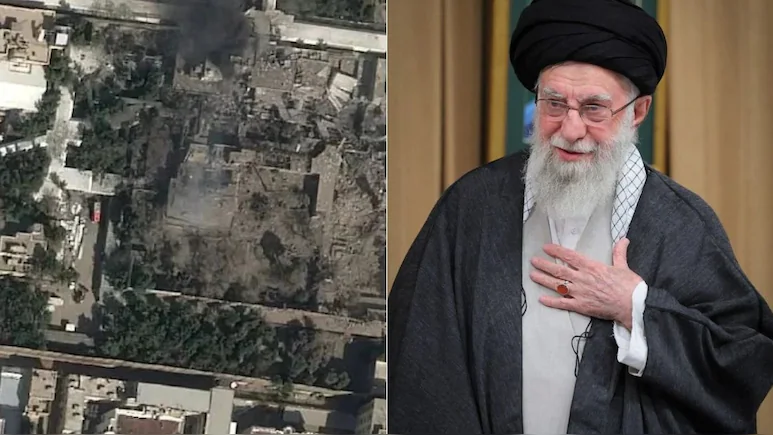
NEW DELHI: A years-long intelligence operation involving cyber espionage, human assets and advanced data analytics culminated in the assassination of Iran’s Supreme Leader Ayatollah Ali Khamenei in a coordinated US-Israeli air strike, according to international media reports.
Khamenei, 86, who had led Iran since 1989, was killed on Saturday morning in a precision strike on his office compound near Pasteur Street in central Tehran. The attack marked the most dramatic escalation yet in the deepening confrontation between Iran, Israel and the United States.
Years of surveillance
At the heart of the operation was a sweeping intelligence campaign that allegedly penetrated Tehran’s urban surveillance grid. Nearly all traffic cameras in key parts of the capital had reportedly been compromised over several years, providing Israeli intelligence with real-time monitoring of movements in and around sensitive government sites.
One particular camera angle near the leadership compound is said to have offered a critical window into routine security operations. Combined with data harvested from mobile networks, intelligence officers were able to build detailed “pattern of life” profiles of security personnel — including duty hours, travel routes, residences and protection assignments.
The data was processed using complex algorithms and social network analysis techniques, enabling analysts to map relationships and movement patterns among Iran’s senior officials.
Signals intelligence and human sources
The operation reportedly drew on the technical capabilities of Israel’s elite signals intelligence unit, Unit 8200, alongside human assets recruited by Mossad. Billions of data points were analysed to produce daily intelligence briefs tracking senior leadership movements.
In the hours before the strike, components of several mobile phone towers near Pasteur Street were allegedly disrupted, preventing Khamenei’s protection detail from receiving warning calls. The disruption created the impression that phones were engaged or unreachable, further isolating the compound.
While Israeli intelligence had tracked a high-level meeting scheduled for Saturday morning, reports suggest the CIA provided confirmation that Khamenei himself would be present — a decisive factor in advancing the strike timeline.
The strike
The attack was launched shortly after midnight in Washington, corresponding to daytime in Iran. US forces reportedly carried out cyber operations to disable Iran’s air defence coordination systems, clearing the path for Israeli aircraft.
The Israel Defense Forces said around 200 fighter jets participated in what it described as the largest operational flyover in the history of the Israeli Air Force, striking roughly 500 targets across Iran. Among the weapons used were long-range precision missiles capable of hitting extremely small targets from distances exceeding 1,000 kilometres.
Khamenei and several senior officials were reportedly meeting inside the compound at the time of impact.
Iranian state television confirmed his death early Sunday, broadcasting archive images under a black banner.
A political decision
Intelligence officials cited in international reports describe the killing not merely as a technological feat but as a political calculation. Once open hostilities began, Iranian leaders were expected to relocate to hardened underground bunkers, making targeted strikes significantly more difficult.
Unlike Hassan Nasrallah, who spent years in hiding before being killed in an Israeli strike in 2024, Khamenei continued to operate publicly from known locations. His visibility, analysts say, made long-term surveillance more feasible.
Khamenei was only the second Supreme Leader of the Islamic Republic, succeeding Ayatollah Ruhollah Khomeini in 1989. His death leaves Iran facing its most consequential political transition in decades.
Regional shockwaves
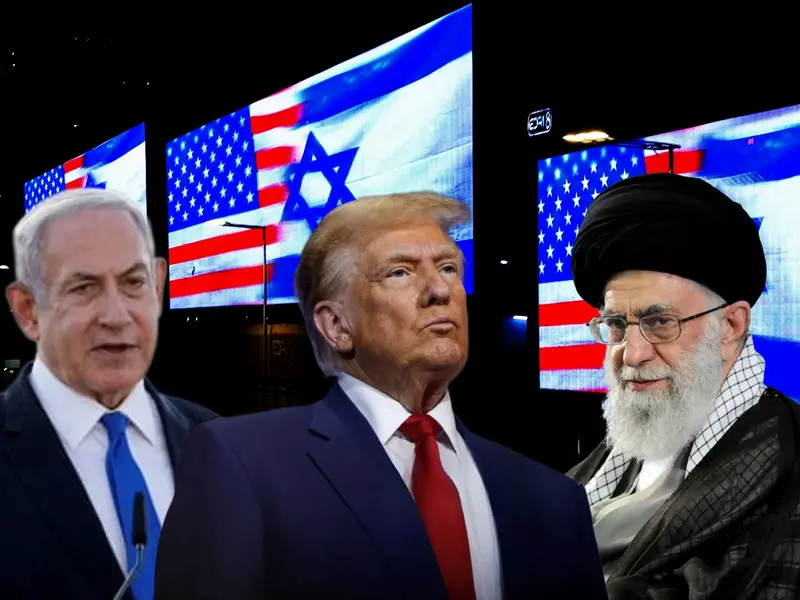
The strike comes amid stalled nuclear negotiations and rising military posturing in the Gulf. In recent weeks, US President Donald Trump had publicly warned of potential action against Iran, while diplomatic efforts mediated by Oman were ongoing.
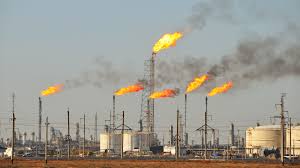
The assassination is expected to trigger severe geopolitical repercussions, including possible retaliation across the region, volatility in global energy markets and renewed instability in the Middle East.
Many operational details remain classified and may never be publicly disclosed. But the scale and sophistication of the campaign underscore the growing role of cyber warfare, data analytics and integrated intelligence networks in shaping modern conflict.