India and Japan elevate strategic ties with landmark pacts on defence, AI and economic security
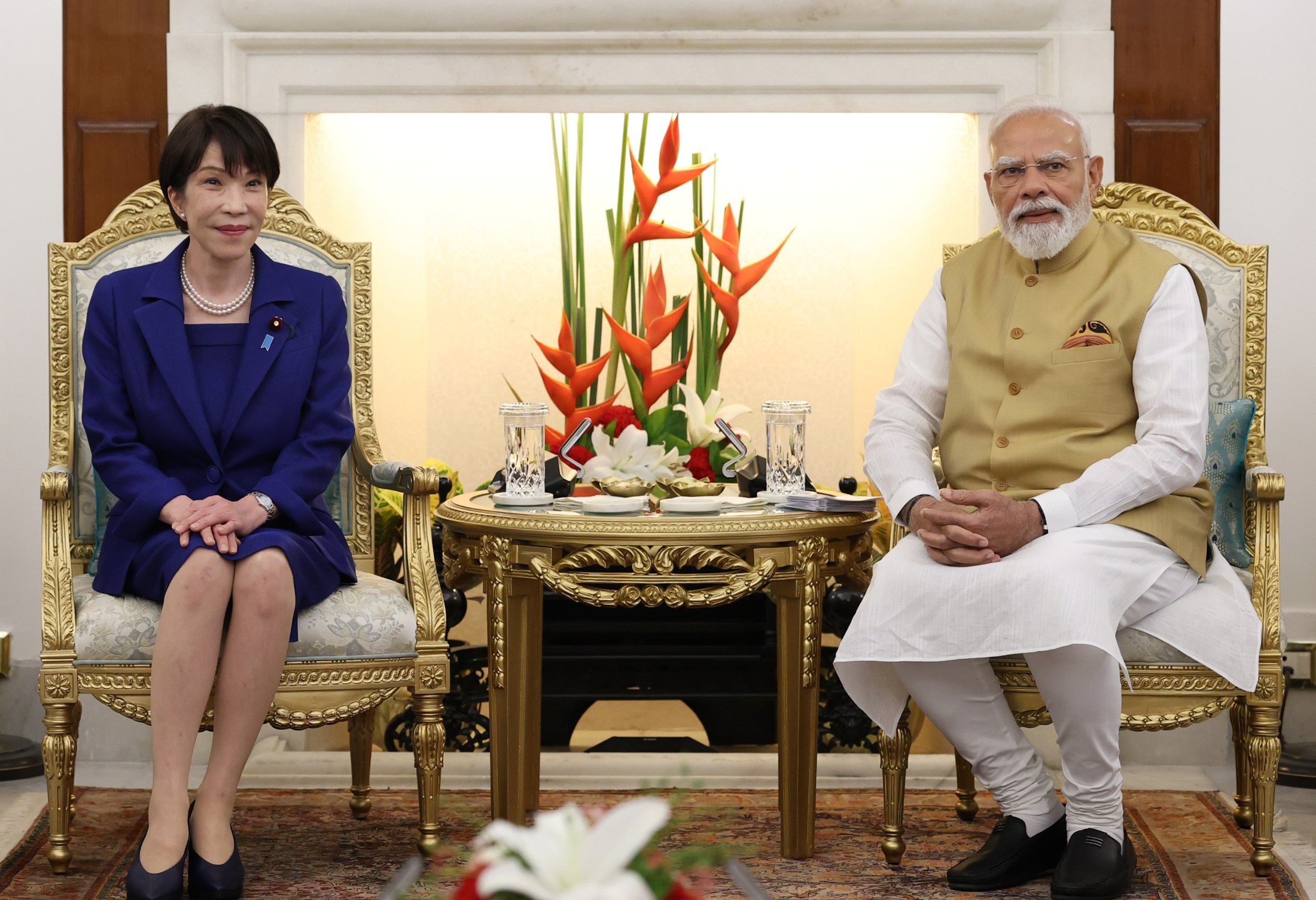
NEW DELHI: India and Japan elevated their Special Strategic and Global Partnership with a series of landmark agreements spanning defence, artificial intelligence (AI), economic security, clean energy and emerging technologies, including the first-ever co-development project in the defence sector between the two countries.
The agreements were announced after the 16th India-Japan Annual Summit in New Delhi, where Prime Minister Narendra Modi and his Japanese counterpart, Sanae Takaichi, held wide-ranging talks on bilateral, regional and global issues.
Addressing a joint press statement, Prime Minister Modi described Japan as one of India's most trusted partners and said the two countries were entering a "new chapter" in their relationship.
"I am delighted to welcome Prime Minister Takaichi on her first visit to India for the India-Japan Annual Summit. She is also Japan's first female Prime Minister and a visionary leader," Modi said, highlighting the historical and cultural links between the two nations.
Emphasising the growing strategic significance of the partnership, Modi said mutual trust had become the foundation of India-Japan ties amid global uncertainty.
"Just a few days ago, at the G7 Summit, I said that in today's environment of global turmoil, mutual trust is our greatest strategic asset. I am proud that the India-Japan partnership fully meets this criterion," he said.
The summit produced three key outcome documents — a Joint Declaration on Economic Security, a Joint Statement on Cooperation in the Field of Artificial Intelligence, and a Joint Statement on Energy Resilience — alongside several memoranda of understanding covering defence, clean energy, critical technologies and research collaboration.
A major highlight of the summit was the signing of the first India-Japan defence co-development project, involving a Naval Radio Antenna system.
"In the defence sector, today we have signed an agreement on the first co-development project between India and Japan. This Naval Radio Antenna project will open a new chapter in our defence technology partnership," Modi said, adding that the collaboration would strengthen regional peace, maritime security and the rules-based order in the Indo-Pacific.
Technology emerged as another central pillar of the partnership, with the two countries adopting a Joint Statement on Artificial Intelligence and facilitating agreements between leading Indian and Japanese AI institutions.
"The confluence of Japan's precision technology and India's software capabilities will give new impetus and strength to global AI development," Modi said.
The leaders also agreed to deepen cooperation in semiconductors, quantum technologies and advanced materials under a new Joint Roadmap on Economic Security aimed at strengthening resilient supply chains.
On the economic front, Modi said bilateral investment ties continued to expand, with more than 100 new business agreements signed over the past year, expected to bring over $10 billion in Japanese investment into India.
He said the two countries had set a target of attracting 10 trillion yen in Japanese investment into India over the next decade while doubling the number of Japanese companies operating in the country.
The summit also witnessed the launch of the India-Japan Biogas Initiative, under which the two countries will support the establishment of 1,000 biogas and organic fertiliser plants across India. The leaders further unveiled initiatives on energy resilience, batteries, green hydrogen and nuclear energy to strengthen clean energy cooperation.
In another significant development, the two sides launched the India-Japan Next Generation Mobility Partnership Framework to expand collaboration beyond the automotive sector into shipbuilding, aviation and logistics.
Healthcare and biotechnology also figured prominently in the discussions, with agreements signed in pharmaceuticals, medical devices and biotechnology to strengthen global health security by combining India's manufacturing scale with Japan's technological expertise.
Modi also underlined the importance of people-to-people ties, announcing expanded cooperation in education, research, skill development, start-ups and talent mobility.
The two leaders agreed to commemorate the 75th anniversary of the establishment of diplomatic relations between India and Japan next year through a calendar of cultural, tourism and creative economy initiatives.
Following the summit, Ministry of External Affairs spokesperson Randhir Jaiswal said the two Prime Ministers held "wide-ranging talks on the full spectrum of India-Japan ties, including trade and investment, economic security, energy, emerging technologies, defence and people-to-people exchanges," while also exchanging views on regional and global developments.
The Ministry of External Affairs said the summit concluded with the adoption of the three landmark documents and the exchange of multiple agreements covering economic security, clean energy, critical technologies and research and development, reinforcing the expanding strategic partnership between the two countries.