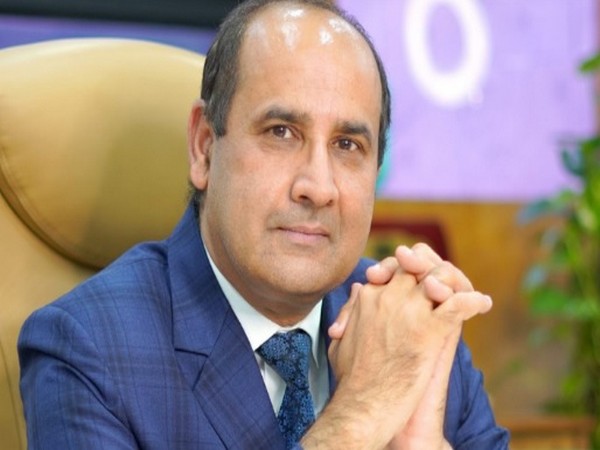
Union Budget 2026 marks strategic shift towards AI-Led capability building: CP Gurnani

NEW DELHI: The Union Budget 2026 has outlined a decisive shift in India’s technology strategy—moving beyond adoption to long-term capability building—by placing strong emphasis on artificial intelligence (AI), semiconductors, cloud computing, and data infrastructure. The Budget signals the government’s intent to position India as a trusted global hub for AI-led innovation, built on inclusive and scalable digital foundations.
Commenting on the Budget’s technology focus, CP Gurnani, Co-Founder and Vice Chairman, AIONOS, said the government has demonstrated a clear understanding that leadership in the digital economy must be built from the ground up.
“Union Budget 2026 signals a decisive shift in how India is approaching technology, from adoption to strategic capability building. The emphasis on AI, semiconductors, cloud and data infrastructure reflects a clear understanding that leadership in the digital economy is built bottom-up, starting with strong foundations,” Gurnani said.
He highlighted the strengthening of the India AI Mission as a key step towards creating a coordinated framework for accelerating AI research, deployment, and ethical governance across sectors. According to him, the Budget recognises that technology-led growth must go hand in hand with skilling, workforce readiness, and MSME enablement.
“This is not a narrow tech agenda. By aligning AI investments with skilling, workforce readiness and MSME enablement, the Budget recognises that scale, inclusion and competitiveness must move together,” he added.
Gurnani also underscored the importance of preparing for AI’s impact on India’s services-driven economy. With services accounting for a significant share of growth and employment, proactive planning, he said, is critical to ensuring a smooth transition.
“Equally important is the focus on preparing for AI’s impact on the services sector. Anticipating change is far more responsible than reacting to disruption. Incentives for digital infrastructure and hardware ecosystems position India as a credible destination for global investment,” he noted.
The Budget’s focus on inclusive technology applications was another key highlight. Initiatives such as Bharat Vistar, which provides farmers with local-language, data-driven crop guidance, and the Centre of Excellence in AI for Education, aimed at improving learning outcomes through AI-powered tools, demonstrate how digital innovation can deliver real-world impact. “As technology becomes central to economic growth, its true impact lies in how inclusively it is applied,” Gurnani said.
He concluded that the combined measures in Union Budget 2026 reflect India’s ambition to transition from being a large consumer of technology to becoming a trusted global platform for AI-led innovation—anchored in talent, infrastructure, and measurable outcomes.