China urges US to immediately withdraw Section 232 tariffs on drones
NEW DELHI:China has urged the United States to immediately withdraw newly imposed Section 232 tariffs on drones and related components, describing the measures as discriminatory and harmful to Chinese companies. The demand came from China's Ministry of Commerce on Thursday, escalating tensions between the world's two largest economies over technology, trade and national security.
Chinese Commerce Ministry spokesperson He Yadong said during a regular press conference that the U.S. measures unfairly target Chinese products and could disrupt international drone supply chains. He said China "firmly opposes" the tariffs and called on Washington to revoke them immediately.
What are the new US tariffs?
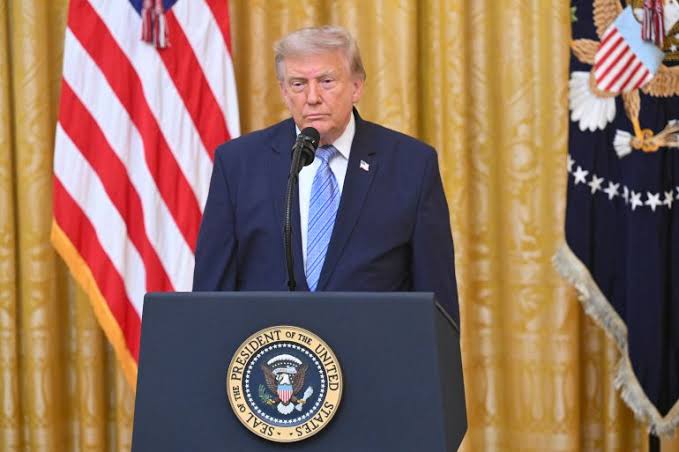
The dispute follows a presidential proclamation issued by U.S. President Donald Trump on August 13 under Section 232 of the Trade Expansion Act of 1962. Section 232 allows the U.S. government to impose tariffs on imports when it determines that they threaten national security.
Under the new policy, certain imported drones and drone components will face tariffs of up to 100%. Drones weighing more than 25 kilograms, drones equipped with thermal-imaging capabilities, certain critical components and drone docking stations are among products facing the higher tariff rate. Smaller drones and specified components are generally subject to a 25% tariff.
Most of the new tariffs are scheduled to take effect from September 3, 2026, although some components covered by the measures will face tariffs at a later date.
Why Washington is targeting drones
The U.S. administration has framed the tariffs primarily as a national-security and supply-chain measure, rather than simply another trade restriction aimed at China.
Washington argues that drones have become increasingly important in areas including defence, public safety, critical infrastructure, agriculture, telecommunications and energy. The U.S. government is concerned about its dependence on foreign-made drones and components, particularly products linked to Chinese supply chains.
The administration has also sought to encourage companies to shift production to the United States. The new measures include provisions intended to support domestic manufacturing and the development of U.S.-based drone supply chains.
The move follows earlier U.S. restrictions on Chinese drone technology. Washington has increasingly raised concerns over the potential security implications of foreign-made drones, particularly their cameras, sensors, communications systems and data-handling capabilities.
China calls the measures discriminatory
Beijing has rejected the U.S. national-security justification and argues that the tariffs unfairly discriminate against Chinese products.
China's Commerce Ministry said the measures could seriously damage the interests of Chinese enterprises while also disrupting cooperation across the global drone industry and supply chain. Beijing's latest statement reflects a broader Chinese objection to what it sees as increasingly restrictive U.S. trade and technology policies targeting Chinese industries.
The latest dispute is particularly significant because China is a dominant force in the global drone industry. Chinese companies and manufacturers have extensive capabilities across drone production and the supply of components, making it difficult for international markets to rapidly reduce their dependence on Chinese manufacturing.
A wider US-China technology battle
The drone dispute is part of a much broader U.S.-China competition over advanced technology and strategic supply chains.
In recent years, Washington and Beijing have imposed restrictions affecting semiconductors, artificial intelligence, telecommunications equipment, electric vehicles, critical minerals and other strategically important industries. Drones have increasingly moved into the same category because of their military, surveillance and commercial applications.
For Washington, reducing dependence on Chinese drone technology is linked to the broader objective of strengthening domestic manufacturing and ensuring that critical technologies are available from trusted U.S. or allied suppliers.
For Beijing, however, the measures represent another example of Washington using national-security arguments to restrict Chinese companies and limit their access to international markets.
Impact on the global drone industry
The tariffs could have consequences well beyond U.S.-China trade relations. Companies selling drones in the American market may face higher costs if their products or components are subject to the new duties.
The U.S. has attempted to differentiate between products based on their capabilities and country of origin. Some U.S. allies are eligible for lower tariff rates under the new framework, while the administration has also moved to prevent companies from simply routing Chinese-made products through third countries to avoid duties.
The policy could therefore accelerate efforts by drone manufacturers to diversify production, source components from alternative suppliers and establish manufacturing facilities in the United States.
At the same time, higher import costs could raise prices for some U.S. consumers, businesses and government agencies that rely on drones for agriculture, infrastructure inspections, surveying, emergency response and other applications.
What happens next?
China's demand for the immediate withdrawal of the tariffs is likely to add another point of friction to already complicated U.S.-China trade relations. Washington has so far shown no indication that it intends to reverse the measures, which are designed to encourage domestic production and address what the administration considers national-security vulnerabilities.
The dispute also comes at a time when both countries are attempting to manage a much wider economic and strategic relationship. Whether the drone tariffs become a long-term trade barrier or lead to further negotiations will depend on broader discussions between Washington and Beijing.
For the global drone industry, the immediate focus will be on how companies adjust their manufacturing, sourcing and pricing strategies ahead of the September implementation of the new U.S. tariffs.