Middle East war widens as Iran, Israel and US exchange strikes; Azerbaijan drawn into conflict

NEW DELHI : The ongoing war involving Iran, Israel and the United States has intensified on 5 March 2026, entering its sixth day with fresh airstrikes, missile attacks and the conflict expanding beyond traditional battlegrounds. New developments include drone strikes on Azerbaijan, attacks on US assets in the Gulf, and continued Israeli bombardment of Tehran, raising fears of a broader regional war.
Fresh strikes in Iran and Israel
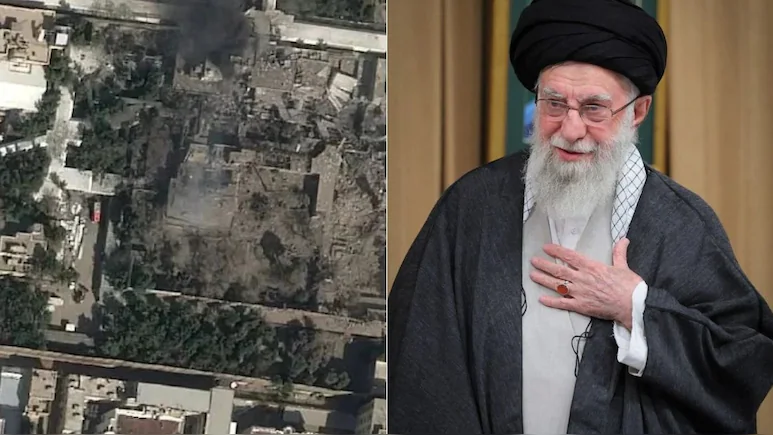
Israeli forces launched another wave of airstrikes targeting military and security facilities in Tehran, continuing the offensive that began after the US-Israel operation against Iranian nuclear and military infrastructure on 28 February. Iran has retaliated with missiles and drones aimed at Israeli territory, triggering air-raid alerts in several Israeli cities.
The war began after coordinated US-Israeli strikes—reportedly aimed at crippling Iran’s nuclear programme and military capabilities—triggered a large-scale retaliation from Tehran across the region.
Iran expands retaliation across the region
Iran has widened its retaliation beyond Israel, targeting US-linked military sites and strategic assets across the Middle East. Drone attacks were reported near American bases in Iraq, while Tehran also claimed to have targeted an oil tanker in the Persian Gulf, escalating fears of disruption to global energy routes.
At the same time, clashes linked to Iran-backed groups have intensified in Lebanon, where Israeli strikes in Beirut reportedly killed a Hamas official amid escalating regional tensions.
Azerbaijan enters the conflict after drone strike
In a major development, the conflict spread to the South Caucasus when Iranian drones struck Nakhchivan International Airport in Azerbaijan’s Nakhchivan exclave. One drone reportedly hit the airport terminal while another crashed near a school in a nearby village, injuring two civilians.
The Azerbaijani government strongly condemned the attack and summoned Iran’s ambassador, warning that it reserves the right to take retaliatory measures.
Analysts say Azerbaijan’s involvement may be linked to its strategic ties with Israel, including energy cooperation and the Baku-Tbilisi-Ceyhan oil pipeline that supplies crude oil to Israel via Turkey.
Growing humanitarian and geopolitical concerns
The expanding war has caused heavy casualties and widespread infrastructure damage. International organisations have warned about civilian deaths and damage to hospitals and schools amid the escalating bombardment.
Meanwhile, the conflict has triggered evacuations, airspace closures and major disruptions to global travel and shipping routes, particularly around the Strait of Hormuz, through which a significant portion of the world’s oil trade passes.
Risk of a wider regional war
With attacks now reported in multiple countries—including Iran, Israel, Lebanon, Iraq, Gulf states and Azerbaijan—analysts warn the crisis could evolve into a broader regional conflict involving additional powers and global economic consequences. Governments worldwide are urging de-escalation and diplomatic negotiations to prevent further expansion of the war.