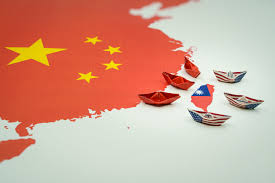
G7 nations push to reduce dependence on China for critical minerals
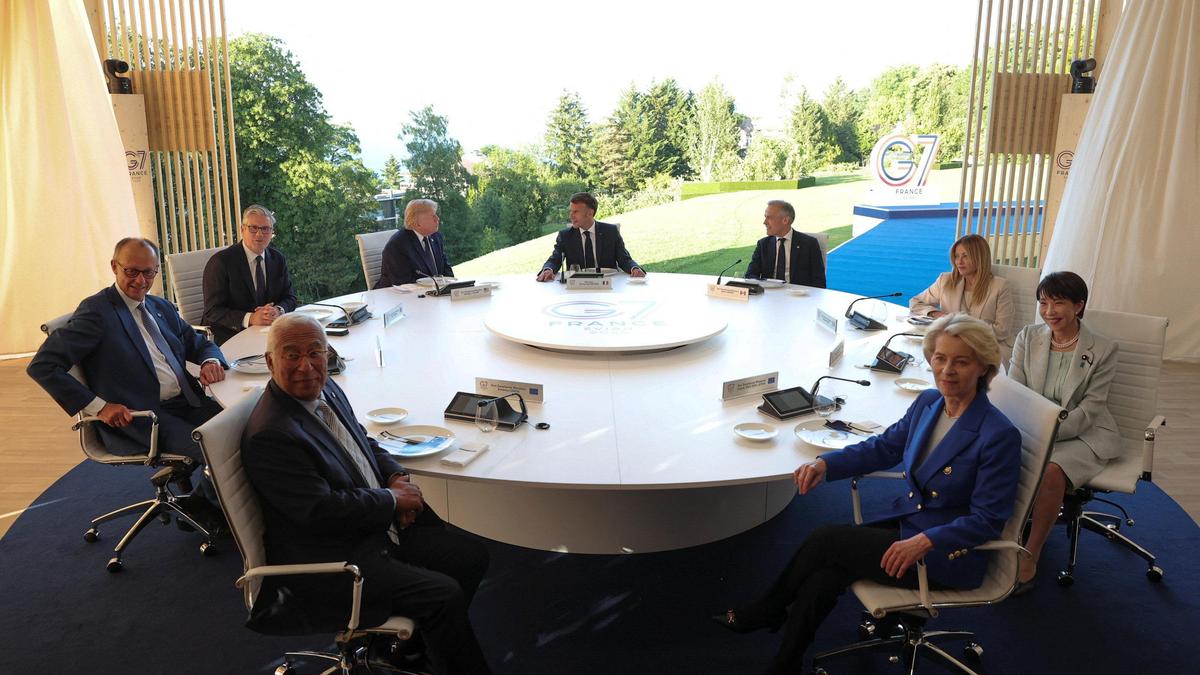
NEW DELHI: Leaders of the Group of Seven (G7) nations are intensifying efforts to reduce their dependence on China for critical minerals and rare earth elements, placing supply-chain security at the center of discussions during the ongoing G7 Summit in France.
The issue has emerged as a key priority for advanced economies amid growing concerns over China's dominant position in the global supply of minerals essential for electric vehicles, semiconductors, renewable energy technologies, defence equipment and other strategic industries. G7 leaders are exploring a coordinated strategy aimed at diversifying supply chains and strengthening access to critical resources through partnerships with trusted countries and increased domestic production.
According to officials familiar with the discussions, the proposed measures include financial incentives, subsidies and investment support to encourage mining, processing and refining of critical minerals outside China. Leaders are also considering joint investments in resource-rich nations and initiatives to develop alternative supply networks that can withstand geopolitical disruptions.
China currently controls a significant share of the global processing and refining capacity for rare earth elements and several critical minerals, giving Beijing substantial influence over international supply chains. Recent export restrictions and trade tensions have heightened concerns among Western nations about the risks of overreliance on a single supplier for materials crucial to economic growth and national security.
G7 members are expected to expand cooperation through new financing mechanisms and strategic partnerships with countries possessing large reserves of lithium, cobalt, nickel, graphite and rare earth elements. The aim is to create resilient and diversified supply chains capable of supporting the global transition to clean energy and advanced manufacturing.
The discussions are also focused on accelerating investments in recycling technologies and developing alternative sources of critical minerals to reduce long-term vulnerabilities. Officials say enhanced collaboration between governments and private industry will be essential to securing stable supplies and meeting growing demand from emerging technologies.
The push comes as geopolitical competition between Western nations and China continues to shape global trade and industrial policies. By strengthening supply-chain resilience and reducing strategic dependencies, G7 leaders hope to safeguard economic security while ensuring continued access to materials vital for future industries.
The initiative is expected to feature prominently in the summit's final communiqué, highlighting a broader effort by the world's leading economies to build more secure, diversified and sustainable supply chains in an increasingly uncertain global environment.

 store @ GF 17,18,19, Pacific Mall,)