IMC 2026: India charts roadmap for 6G, satellite connectivity and AI-native networks
.jpeg)
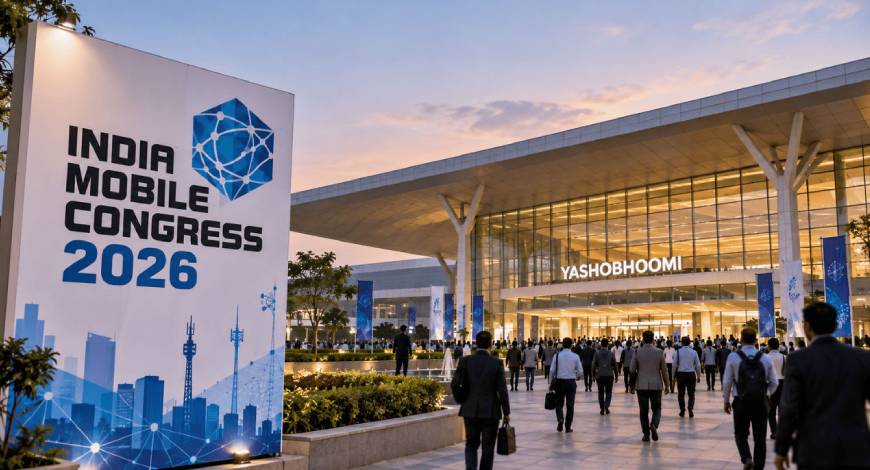
NEW DELHI: The 10th edition of India Mobile Congress (IMC) 2026 brought together global technology leaders, policymakers, telecom operators and researchers to discuss the future of digital connectivity, with a focus on 6G testbeds, direct-to-device satellite communications and artificial intelligence-powered networks.
Held at Yashobhoomi under the theme “Scale Without Boundaries”, the four-day event is focusing on the next phase of India's digital transformation, including indigenous technology development, satellite-terrestrial network integration, AI infrastructure and expanding connectivity to underserved communities.
Prime Minister Narendra Modi inaugurated the event, highlighting India's transition from a technology consumer to a global technology creator. He stressed the importance of developing indigenous intellectual property, strengthening homegrown product design and advancing semiconductor manufacturing to build a sovereign digital ecosystem.
Union Minister for Communications and Development of North Eastern Region Jyotiraditya M. Scindia said India aimed to increase its 5G user base from 550 million to one billion by 2030. He also announced that the International Telecommunication Union (ITU) Council had accepted India's proposal to host the ITU Plenipotentiary Conference in 2030.
Addressing the inaugural session, Scindia said India's digital infrastructure had demonstrated that connectivity could be expanded at scale without compromising affordability. Citing platforms such as UPI, Aadhaar and DigiLocker, he said digital connectivity had become a foundation for economic participation and access to services.
He emphasised the need for international cooperation, harmonised spectrum policies and innovative financing to ensure that people were not excluded from emerging opportunities in an AI-driven economy because of geographical or financial barriers.
A key highlight of the day's programme was the ministerial session, “Scale Without Boundaries: Investing in the Next Billion Digital Connections”. Chaired by Scindia, the session featured Estonia's Minister of Justice and Digital Affairs Liisa-Ly Pakosta, Japan's Vice-Minister for International Affairs Hideo Fuseda, ITU Telecommunication Standardization Bureau Director Seizo Onoe and GSMA Chief Regulatory Officer John Vincent Giusti.
The discussions focused on investment, infrastructure sharing and strategies to extend connectivity to rural and underserved populations.
The third International Bharat 6G Symposium 2026 was also inaugurated, bringing discussions on next-generation connectivity closer to practical testbeds, research and deep-tech innovation. Participants examined how 6G could integrate communications and AI while enabling new industrial applications.
Satellite connectivity emerged as another major focus, particularly direct-to-device technology, which aims to connect compatible devices directly to satellites. Industry leaders highlighted the need for affordable devices, suitable spectrum policies and regulatory frameworks that protect terrestrial networks from interference.
Dr Vinosh Babu James, Director of Technical Standards at Qualcomm, said the wider adoption of satellite connectivity would depend on bringing the technology to mid-range and affordable smartphones. He noted that economies of scale and the development of commercially viable use cases would be critical to expanding adoption in India.
Luciana Camargos, Head of Spectrum at GSMA, said direct-to-device services could play an important role in extending connectivity, provided regulatory safeguards, device affordability and digital literacy challenges were addressed.
Lt. Gen. A.K. Bhatt (Retd.), Director General of the Indian Space Association, underlined the importance of sovereignty and security as satellite communications become increasingly integrated with terrestrial 5G and future 6G networks. He called for clear security and governance frameworks that protect national interests while allowing innovation to progress.
The forum also examined the growing role of AI in telecom network management and enterprise operations. Magnus Ewerbring, CTO for Asia-Pacific at Ericsson, said networks were moving towards intent-driven operations, where operators specify desired outcomes and networks dynamically determine how to deliver them.
Bharti Airtel Executive Vice-President for Networks Ajay Jain said AI and autonomous networks could help operators automate routine tasks, optimise performance and identify capacity requirements, allowing engineers to concentrate on higher-value work.
Enterprise AI and cloud infrastructure were also central to the discussions. Sridhar Gollapudi, Head of Telecom Industry Solutions at Google Cloud, highlighted the need for programmable networks that coordinate data movement between cloud and edge environments to improve the efficiency of AI workloads.
Sangeeta Roy, Director of Global Partner Sales Business at Intel, said scaling enterprise AI would require simplified infrastructure, reduced dependence on proprietary systems and software that allows businesses to deploy AI across edge and cloud environments securely and cost-effectively.
Digital trust and cybersecurity featured prominently in discussions on the future of connectivity. Lt. Gen. Dr. S.P. Kochhar, Director General of the Cellular Operators Association of India (COAI), said the next decade of India's digital transformation would require greater awareness of risks such as deepfakes alongside a focus on responsible innovation and safer digital services.
Bharti Airtel Group Chief Regulatory Officer and Director of Corporate Affairs Rahul Vatts called for a coordinated approach involving governments, telecom operators, digital platforms and technology providers to establish consistent trust and safety standards across the digital ecosystem.
The event also highlighted India's ambition to strengthen its position in global technology manufacturing and innovation. Anku Jain, Managing Director of MediaTek, called for further support for startups, deep-tech ventures and semiconductor development, noting that entrepreneurship and investment would be important to India's long-term technology growth.
Organised by the Department of Telecommunications under the Ministry of Communications and COAI, IMC 2026 is expected to attract more than 1.5 lakh attendees from over 100 countries. The event brings together more than 600 partners and exhibitors, over 500 startups and 900 thought leaders, with more than 2,000 technology use cases showcased across over 120 sessions.
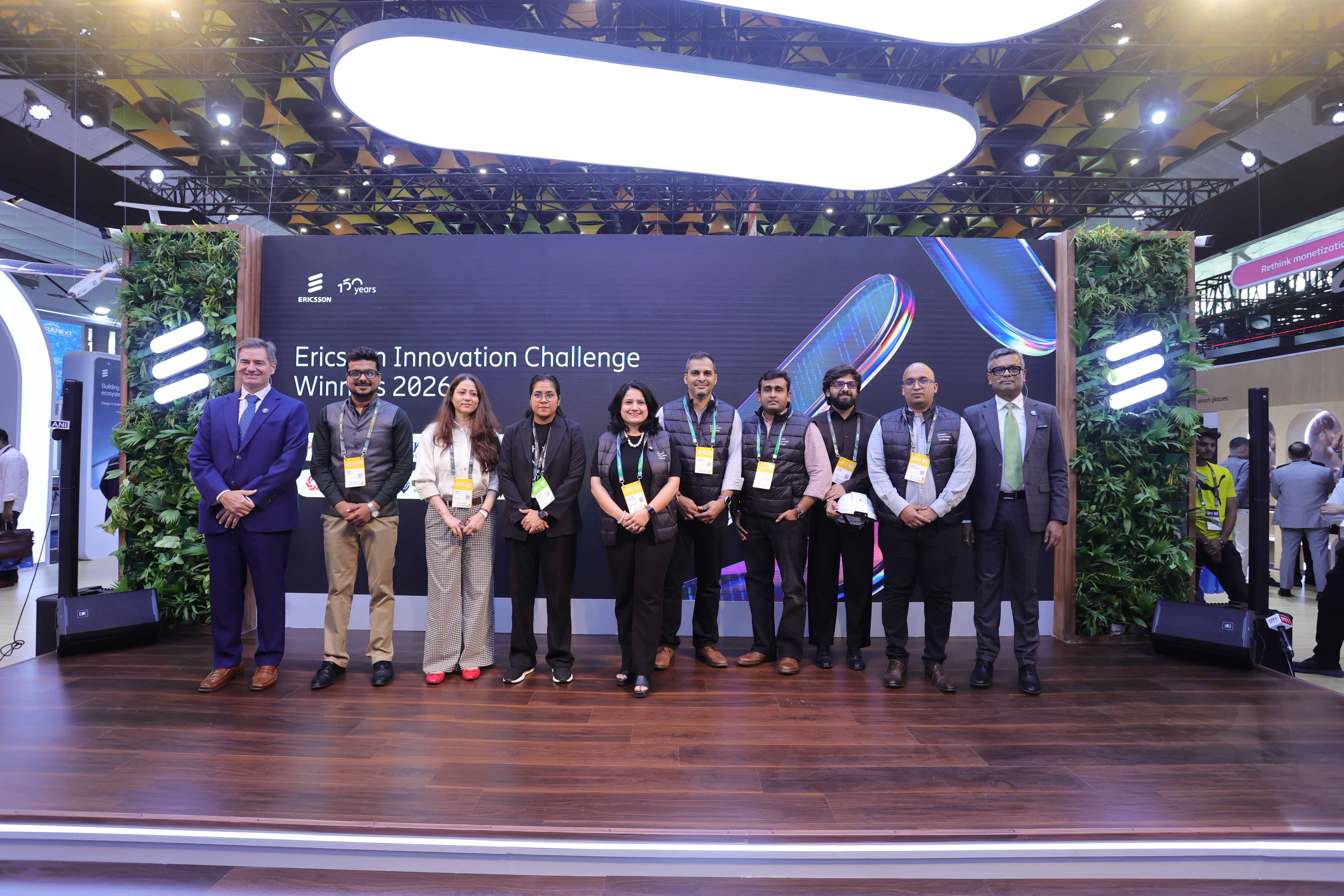
The programme spans 5G and 6G, AI-native networks, semiconductors, non-terrestrial networks, cybersecurity, quantum communications, enterprise transformation, electronics manufacturing and sustainability. The IMC Awards also recognised innovators and contributors across the telecommunications and digital technology ecosystem.
The discussions underscored India's ambition to move beyond expanding digital access towards developing homegrown technologies, strengthening global standards and building intelligent, secure and inclusive networks for the next phase of the digital economy.